Showing posts with label Obama. Show all posts

Monday, June 29, 2009

Current Situation in Honduras

Today, I present to all readers, Pamela Fernandez, a university colleague of mine from Honduras who was nice enough to email me a incredibly well articulated analysis of the situation going on down in Honduras. The original message arrived in my mail box last night at 1:18 am, June 29, 2009 - Eastern Standard Time.

Pamela writes:

I feel the media has done a terrible job in reporting the events that took place yesterday in Honduras. A friend of a friend mainly wrote the following 8 points. I have edited them out a bit and added the translation of the constitution article. Below you’ll find my views.

1. The event this morning should be taken as an arrest against a Honduran citizen, Manuel Zelaya, who broke the constitutional Honduran law in multiple occasions over the last few days. This SHOULD NOT be taken as a Coup d'état.
TRANSLATION - Article 239.- The citizen that has been the head of the Executive Branch cannot be President or Vice-President again.

Whoever violates this law or proposes its reform, as well as those that support such violation directly or indirectly, will immediately cease in their functions and will be unable to hold any public office for a period of 10 years.

2. The vast majority of Hondurans firmly oppose Manuel Zelaya and are in favor of his arrest.

3. The current news being portrayed in international networks appear to be heavily tilted toward a contrarian view of most Hondurans.

4. The majority of Hondurans are not in favor of Manuel Zelaya and are extremely proud of our congress and military for their stance in favor of democracy and peace.

5. The events happening today were caused by an attempt by Manuel Zelaya to manipulate our country and its constitution to fulfill his ultimate goal of remaining in power indefinitely.

6. The world should be proud of Honduras as we are the first Latin-American country to stand against a tyrannical leader who has tried to topple democracy and peace in our country.

7. Declarations made by Hugo Chavez should be discredited immediately. He should, as President Obama said, allow Hondurans to solve this issue through open communication following LEGAL processes.

8. It is ONLY in the interest of Honduras and its citizens that democracy prevails.

Now mine:

Facts:
• The economic growth the country experienced in 2006 was a result of the previous government not of Mel’s. The country is now in as much debt as it was before. After a GDP growth of 6% in the 2005, according to the World Bank it is expected to fall to about 2% in 2009.

• In December 2008, Mel decided to raise the minimum wage by 60% against the economists and private sector advice. The government itself will not be able to pay the public employees including teachers and doctors next year. It has resulted in a higher than unemployment rate and it is expected to rise even more in 2010.

• The public higher education system cannot afford to pay the university professors under the new minimum. The professors went on strike for two months and the issue still undresolved.

• After the recent earthquake Mel denied the severity of the damages in port city of Puerto Cortes and never declared a state of emergency in the country. In previous years, he had also undermined the impact of floods and hunger stricken south.

• There were no reported cases of swine flu in Honduras before the OAS summit in San Pedro Sula. Once the summit was over the cases jumped from 0 to 118 as confirmed by the BBC. But the Health Ministry says there are 1,000 cases.

• According to the Observatorio Centro Americano de la Violencia, the there are 42 homicides per 1,000 inhabitants; the international rate is 8.8. In average, there are at least 12 violent deaths per day, the highest in Central America.

• According to the 2004 World Bank report, 50% of the population lived under the poverty line and 36.2% below the extreme poverty line 36.2%. The World Food Program estimated it at 73% in 2008; currently the BBC reports a 70% in the country profile.

• The country’s budget for the 2009 fiscal year was never made, some argue there’s no money and that’s why Mel would not make it.

• No body really knows how many millions of Lempiras and possibly dollars were spent on publicity for the referendum.

• Mel was paying people to vote “Yes” in the referendum.

• Hugo Chaves, Correa, Elbo and Ortega are currently in Nicaragua holding an emergency meeting of the ALBA and Central American nations. Chavez said that he would respect Honduras’ sovereignty and would not make a military intervention.

~~~~~~~~~~~~~~~~~~~~~~~~~~~~~~

Rumors:

• The referendum materials were sent from Venezuela.

• Mel would have done an “auto” Coup against the congress and the military today if the Public Ministry (not the military) had tried to stop the voting.

• Based on a reported increase flow of Nicaraguans into Honduras: hundreds of Nicaraguan soldiers crossed the border on Friday and Saturday disguised as civilians.

• Chavez is planning to do a military intervention in Honduras. Still, his discourse last night was borderline offensive.

All that said, the president of congress Roberto Micheletti was sworn as interim president promising and making it a decree to hold the general elections on November 29th as scheduled and give the power to the elected president on January 27th. The military is not in power, they just did their job and defended the constitution.

Of course, there are plenty of sketchy things in the whole process. For example, Mel’s resignation letter, which he denies writing, the fact that Micheletti was running for president but lost the primaries are just a few; and the fact that TV, radio, and internet were cut in the main cities for couple of hours during the coup. Also a fact, not every Honduran likes Micheletti but not every Honduran likes Mel. We are trying to pick the lesser of 2 evils.

I’m not against the citizens’ right to give their opinion in the referendum but the Electoral Institute was not supervising it. I, as are many Hondurans, am aware of the social injustice and the extreme poverty in my country. We feared and questioned the transparency of the process. We also believe, and know, that Mel was acting on his interest and not that of the country.

I’m not happy that we have come to this but now we can only wonder what would have happened if Mel had gone ahead with the referendum. From my point of view, the assurance of elections in November makes this a move in favor of democracy and not one against it. Sadly, the international community does not see it this way. The UN, OAS, EU and US want Mel back because he was democratically elected, Honduras doesn’t want him back because he was trying to interrupt the democratic process by staying longer as a president.

Honduras is in peace right now, nobody died, very few were hurt, after some riots by Mel’s supporters yesterday there’s no civil unrest. The curfew is not against civil liberties it is meant to prevent riots and such from happening. In case that rumors are true and Hugo Chavez tries to use military force in Honduras, we hope and pray… I hope he doesn’t and hope we can get back solving the real problems of the country.

The good thing in all of this? I want to believe that Hondurans will wake up and take a more active role in politics. That hopefully the corrupt politicians will take a hint and realize that the “people” as Mel said can stand up against them when need it.

If you read this much, THANK YOU very much,

Pamela Fernandez is graduate of American University who specializes in visual media and film studies. You can learn more about Pamela and see some of her work at her personal site -- http://www.pamelafer.com/


Share/Save/Bookmark

Tuesday, May 26, 2009

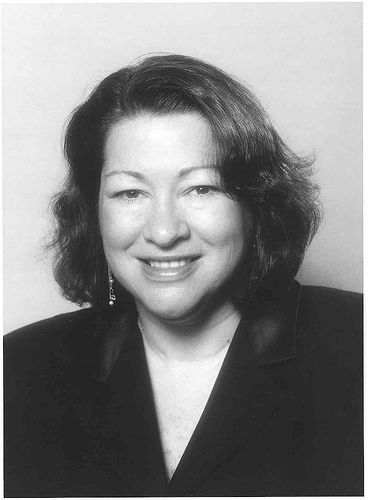
Obama nominates hispanic woman from New York City for the Supreme Court!

WASHINGTON (Reuters) - President Barack Obama will nominate Appeals Judge Sonia Sotomayor to the U.S. Supreme Court, a White House official said on Tuesday, selecting a woman who would be the court's first Latino to replace retiring Justice David Souter.

Obama's choice of Sotomayor, a 54-year-old judge on the 2nd U.S. Circuit Court of Appeals in New York, was unlikely to change the ideological makeup of the high court because Souter, 69, was part of the panel's liberal wing.

The court hands down rulings on such divisive social issues as abortion rights and the death penalty as well as deciding business and property rights cases. Its members are appointed for life but require Senate confirmation.

Conservatives quickly moved to criticize the choice but political analysts said that, barring an unexpected scandal, there was little chance the nomination could be derailed.

Sotomayor, a child of Puerto Rican parents, is most widely known for her decision as a trial judge in 1995 to bar Major League Baseball from using replacement players, ending a nearly year-long strike.

Click here to access the full article from Reuters


Share/Save/Bookmark

Friday, May 22, 2009

Argentina's debt; finding a middle ground

[Argentina Analysis] -- Perspective from a recent college graduate with a econ degree

Argentina's beloved Maradona

When I entered American University in 2004, one of the most popular topics of conversation among the students studying International Relations or Economics, was the Argentine economic crisis of 1999-2002.

As a young Peruvian-American, studying economics, I frequently found myself debating the event with people from all over the world, including Latinos. It seemed that students, teachers and the authors of our textbooks had all gotten together and decided to use Argentina as a prime example of how

a) The Washington Consensus had failed

b) The IMF and other regional lenders had doomed Argentina by lending money with unfair "strings attached"

Let me make one thing clear... American University is a VERY liberal school.

I quickly came to feel a consensus had been reached within the classrooms of American University (AU). Argentina emerged as the symbolic victim of IMF abuses and the misguided Washington Consensus of the 90's.

Pegging the peso to the U.S Dollar, initially a wise decision to help stem inflation, was doomed to fail from the start because there would be no way Argentina's industrial and labor sectors would be able to adjust to a appreciating dollar.

Economists and foreign policy buffs at AU did not argue the value of having a lending system, the global economy after all needs one. However, it became very easy "for the average Joe" to accept Argentina's default during this era of backlash against the Washington Consensus and also of course in the midst of a liberal University environment.

I will be posting this article on the American University Alumni LinkedIn and Facebook group, hoping to get some feedback from students currently attending. Which I will then share on ChinaSouthAmerica.com

If you have not yet heard or read, there are a few "liberal democrats" in the House of Representatives trying to get Argentina to pay up. I have included a few paragraphs from this MercoPress article which outlines their efforts.

~~~~~~~~~~~~~~~~~~~~~~~~~~~~~~

The bill, H.R. 2493, called the Judgment Evading Foreign States Accountability Act of 2009, would bar from US capital markets any nation that has been in default of US court judgments totaling more than 100 million US dollars for more than two years. The legislation would also require the US government to consider the default status of these countries before granting them aid.

"Argentina is ignoring billions of dollars in US court judgments, which has hurt not just US citizens, but also Argentine citizens," said ATFA Executive Director Robert Raben. "US taxpayers are still waiting to be repaid money they lent to Argentina in good faith."

The effort is being led by Representative Eric Massa, a Democrat from New York State who was raised in Argentina while his father served as US Naval Attaché in Buenos Aires. Also introducing the legislation were Representatives Paul Tonko (D-NY), Robert Wexler (D-FL), Timothy Bishop (D-NY), Carolyn Maloney (D-NY), Dan Maffei (D-NY), Mike McMahon (D-NY), Ed Towns (D-NY), and Brian Higgins (D-NY).

~~~~~~~~~~~~~~~~~~~~~~~~~~~~~~

Generally speaking, Latin America was happy with the election of Barack Obama. Many experts believe, and I happen to agree, a new era in U.S-Latin American relations has been initiated. After eight long years of being ignored by President Bush who would argue?

In Argentina, Obama's election was welcomed by Cristina Fernandez. However, as this MercoPress article explains, Argentina's President is finding herself increasingly isolated. The most frequent visitor to Argentina has become Hugo Chavez. Fernandez has not been invited to the White House like her Brazilian and Chilean counterparts. Obama also neglected to make a pit-stop in Argentina, as he did in Mexico, on the way to the Summit of the Americas. For the third largest country in Latin America after Brazil and Mexico, this should be insulting, and... indicative of the way the international community and the United States currently view Argentina.

"Che! We got no money!"

Additionally, within the region, Argentina has ongoing political disputes with: neighboring Chile over energy exports, with Uruguay over a bridge that links the two countries, various trade disputes with Brazil within the Mercosur community, and has banned the crossing of Bolivian and Paraguayan soybeans through Argentine territory--which much infuriate two land lock countries trying to export their produce.

Joaquin Morales Solá, a leading political analyst, writing a column in La Nacion recalls, "that there have been no major foreign visitors to Argentina for over two years, precisely since then President Nestor Kirchner left the Queen of Holland waiting at an official ceremony; he never turned up and never apologized. The only and sporadic “business” visits have been from Chavez, Lula da Silva and Bolivia’s Evo Morales."

Furthermore Obama is not Bush, he’s one of the most popular world leaders and Chavez short of oil revenue can’t attack the US president. Nevertheless says Morales Solá, the only leader visiting Argentina is heading for the perfect dictatorship: a ban on the import of books and only official Chavez, Bolivar and Marx texts at school. The leader of the Venezuelan opposition and elected mayor of the country’s second largest city was forced to take refuge in Peru; the nationalization of industries, confiscation of companies and land advances since “private property” can’t be an impediment for the revolution. Chavez is determined to end with the independent media and has virtually broken relations with Israel and the local Venezuelan Jewish community.

So with all this drama... let me now ask. "Should Argentina be forced to pay back its debt to foreign creditors?

When I was a first year university student I would have answered NO. Five years later, my answer has changed, albeit slightly.

Yes, the polcies put in place by the IMF in Argentina in the late 90's were extremly unfair. I am not debating this. However, I do not think it is wise for Argentina to continue refusing to pay their debt. Ecuador recently followed in Argentina's footsteps, defaulting on their own foreign debt as bonds came due. Both countries have offered their debt holders reduced payback (ie: $.50 to the $1.00), but as of now no deal has yet to be reached with Argentina and their creditors.

According to this MercoPress article, a team of Argentine economists concluded in 2006 that Argentina's default status causes the nation to lose more than 6 billion US dollars in foreign direct investment every year, reports MercoPress in this article.

Furthermore, by the estimates of the President of the American Task Force Argentina (ATFA), Robert Raben "President Kirchner has said several times she's prepared to negotiate with bondholders, but we've seen no action whatsoever," Raben said. "Argentina has 45 billion in reserves and can afford to pay its 3.5 billion in debts to US bondholders many times over. It's time to resolve this issue for the benefit of both nations."

Of course this doesn't mean they can afford to use their $45 billion to pay off international investors... they need it for many other things like making sure the Argentine Peso doesn't slip off the fact of the earth. Nonetheless it does not help when you consider the creditors are aware of this, and that Argentina's leadership has been incredibly unwilling to compromise.

I know one thing, Latin America will continue to need to borrow money. The Bank of the South and other regional lending institutions can not replace the United States or the IMF any time soon.

Argentina can cry about how unfair the loans they must repay are, but reaching some type of deal would at least allow Argentina to gain access to international capital markets once again. For a country with so much potential, the current government really knows how to hold a grudge.


Share/Save/Bookmark

Thursday, April 23, 2009

Esteban Colberto live from Trinidad and Tobago

Hilarious clip from last nights Colbert Report on Comedy Central. If you are a international reader or simply someone who is not familiar with Stephen Colbert I would like to point out that he is the host of a show that is a political satire.

Please watch with a open mind and realize he is being sarcastic...

The Colbert ReportMon - Thurs 11:30pm / 10:30c
Summit of All Fears
colbertnation.com
Colbert Report Full EpisodesPolitical HumorGay Marriage Commercial


If you make it to the end of the video he does a very funny little bit on the US demand for drugs. Worth your time watching.

Monday, April 20, 2009

Obama a hit at the Summit of the Americas - Reuters Video

Overall, this Reuters video does a decent job of summing up the Summit of the Americas in 2 minutes time. It doesn't go into too much detail, but does highlight how the leaders of the Americas received the new president of the United States.

Other countries news sites had slightly different areas of focus than the coverage in the NYT, WSJ or other major online US news.


Apr. 19 (Reuters)- Latin American leaders are hailing as a success an Americas summit that consecrated President Barack Obama as a positive partner in the hemisphere.

Thursday, April 16, 2009

Tax Day in the US provokes "Tea Party" protests


Yes! The US has elected an articulate, charismatic leader with integrity. Something we lacked for the past 8 years when we had the guy in office who recently had a shoe thrown at him while in Iraq.

However, not all is fine and dandy in the Good old US of A. The United States has Obama fever but that does not mean the conservatives and the right are sitting quietly the side lines as Obama does what he pleases.

Señor Karl Rove, remember him from the whole Valerie Plane scandal a few years back? He hit the presses this weekend with a OP-ED from the Wall Street Journal you can read by clicking here.


Wednesday, April 15, 2009

What's shakin in Latin America?


Obama leaves for Mexico and prepares for regional summit test - MercoPress

United States President Barack Obama heads to Mexico Thursday and then continues on to Trinidad and Tobago for the fifth Summit of the Americas. Security concerns along the US-Mexico border are expected to top Mr. Obama’s discussions with Mexican President Felipe Calderon, while the summit provides an opportunity to reinvigorate the US hemispheric ties and forge a regional response to the global economic downturn, according to a Voice of America report.


~~~~~~~~~~~~~~~~~~~~~~~~~~~~~~~~~~~~~~~~~~


Peru's economy likely to have grown 3.1% in 1Q 2009 - Andina

Lima, Apr. 14 (ANDINA).- Peru's economy might have grown 3.1 percent in the first quarter, according to the Lider index estimates, which shows economic trends in the short term, stated today the Ministry of Economy and Finances (MEF).

Peruvian economy keeps growing despite global crisis. Photo: ANDINA/Archive

This estimate is lower than the 3.8 percent reported by the Ministry in last month's report.

Under the new estimates, the economy would have grown by 2.2 in February, lower than the three percent predicted previously, however the Ministry keeps its March estimate of 3.9 percent.


~~~~~~~~~~~~~~~~~~~~~~~~~~~~~~~~~~~~~~~~~~


Bilateral commission to study power sales to Chile - BNAmericas

Argentine and Paraguayan government officials have agreed to establish a bilateral commission to study the technical feasibility of selling power to Chile.

The commission will have 180 days to carry out the study, Paraguay's presidential website reported.

Paraguay would receive roughly US$140mn/y from the energy sales, according to Carlos Cardozo, the landlocked country's director of the EBY joint venture, which administers the Yacyretá hydroelectric dam on the Argentine-Paraguayan border.


~~~~~~~~~~~~~~~~~~~~~~~~~~~~~~~~~~~~~~~~~~


Supermercados chinos - Danwei, Nancy Lu (Chinese run supermarkets in Argentina)

At first glance, this book may seem uninteresting. After all, nobody reads manuals.

But upon closer inspection, you realize that this is a Chinese-Spanish language manual for running a supermarket. Open it and you find the distinctive Rioplatense Spanish of Argentina, with useful phrases such as “Gracias a vos: 谢谢你” (thank you) or “Yo tampoco tengo monedas: 我也没有硬币” (I don’t have coins either).

One finer detail of the book is that it is written in simplified Chinese, addressed to a mainland audience. Yet the name in traditional Chinese at the bottom of the cover indicates something about the author — he is Taiwanese.

The evolution of the Chinese-run supermarkets provides an interesting snapshot of the changing Chinese presence in Buenos Aires. While most Chinese-run supermarkets were originally opened by immigrants from Taiwan, there is a shift towards these businesses being sold to and run by mainland Chinese. This book is further evidence of that trend.

Monday, April 13, 2009

Latin American fence mending - Reuters Video


Apr. 13 (Reuters) - President Obama heads south as part of an effort to establish a new relationship with Latin America.

Thursday, March 26, 2009

Hernando de Soto, Peruvian Economist shares his thoughts via the Wall Street Journal

The Obama administration has finally come up with a plan to deal with the real cause of the credit crunch: the infamous "toxic assets" on bank balance sheets that have scared off investors and borrowers, clogging credit markets around the world. But if Treasury Secretary Timothy Geithner hopes to prevent a repeat of this global economic crisis, his rescue plan must recognize that the real problem is not the bad loans, but the debasement of the paper they are printed on.

Today's global crisis -- a loss on paper of more than $50 trillion in stocks, real estate, commodities and operational earnings within 15 months -- cannot be explained only by the default on a meager 7% of subprime mortgages (worth probably no more than $1 trillion) that triggered it. The real villain is the lack of trust in the paper on which they -- and all other assets -- are printed. If we don't restore trust in paper, the next default -- on credit cards or student loans -- will trigger another collapse in paper and bring the world economy to its knees.

If you think about it, everything of value we own travels on property paper. At the beginning of the decade there was about $100 trillion worth of property paper representing tangible goods such as land, buildings, and patents world-wide, and some $170 trillion representing ownership over such semiliquid assets as mortgages, stocks and bonds. Since then, however, aggressive financiers have manufactured what the Bank for International Settlements estimates to be $1 quadrillion worth of new derivatives (mortgage-backed securities, collateralized debt obligations, and credit default swaps) that have flooded the market.


Mr. de Soto, the author of "The Mystery of Capital" (Basic Books, 2000) and "The Other Path" (Harper and Row, 1989), co-chairs the Commission on Legal Empowerment of the Poor.

Saturday, February 7, 2009

Deal Announced on Stimulus; Weekend Vote Likely - AP Press


With job losses soaring nationwide, Senate Democrats reached agreement with a small group of Republicans on an economic stimulus measure at the heart of President Obama's plan for combating the worst recession in decades. (Feb. 6)

Thursday, January 22, 2009

Good readings

Opinion: India, China, and Obama's Oil Policy
by William Nobrega
Business Week Online 1/22/2009


If China's Growth Goes South What Happens to Oil?
by G. Allen Brooks
Parks Paton Hoepel & Brown 1/22/2009


The China factor and what it means for the price of copper
by Simon Hunt
Weybridge, UK (SHSS) 1/14/2009

Sunday, August 31, 2008

One Disaster after the next -- Hurricanes, Earthquakes, Monsoons and more...

It's been a hectic week for anyone paying attention to world news. This week, Financial markets began with the typical up one day and down the next scenario that has been playing out for the past few weeks now. Adding to it all, even more problems have emerged concerning slowing economies around the world (the US actually being an exception this time), more credit woes and a bunch of other wonderful developments that are not really helping bring back market confidence.

Add to this mix... (apologies if I miss a natural disaster affecting some region of the world, but Western media is now being dominated by the news on the hurricane front in the gulf coast)

- Two hurricanes passing over poor Cuba on route to the coasts of Louisiana and Texas. Click here to access a full article covering the storm from Reuters.

- Yet another earthquake in Sichuan province of China... yes the same province that suffered the horrible quake earlier this year in May. Click here to read more on yesterdays quake from Xinhua.


Residents gather around campfire to evade earthquake in Yinlu Village, Datian Town, Renhe District of Panzhihua City, southwest China's Sichuan Province, August 31, 2008. Twenty-two people were dead after an earthquake measuring 6.1 on the Richter scale hit Panzhihua City on Saturday. As of 9 p.m., 17 people were reported dead and about 100 others injured in Sichuan, and five people dead and 35 others injured in neighboring Yunnan Province. The quake struck the juncture of Renhe District of Panzhihua and Huili County of the Yi Autonomous Prefecture of Liangshan at 4:30 p.m. (Beijing time). (Xinhua/Chen Haining)

- Flooding in India... massive flooding, click here to read the full updated story from AFP

You might have noticed how earlier in the week India was dominating headlines in Western press, then suddenly a tropical storm goes nasty and New Orleans takes over... leaving the quake hit region (2nd time this year now), little sympathy from the West.

I think CNN, MSNBC and Fox News are having a panic attack right about now (that is if they where living beings) because its just too darn hard to cover Obama vs McCain and all these juicy rating grabbing disasters...

Overall-- things look gloomy. More updates to come concerning Commodities, South-South Cooperation and Colombia's Oil Industry